
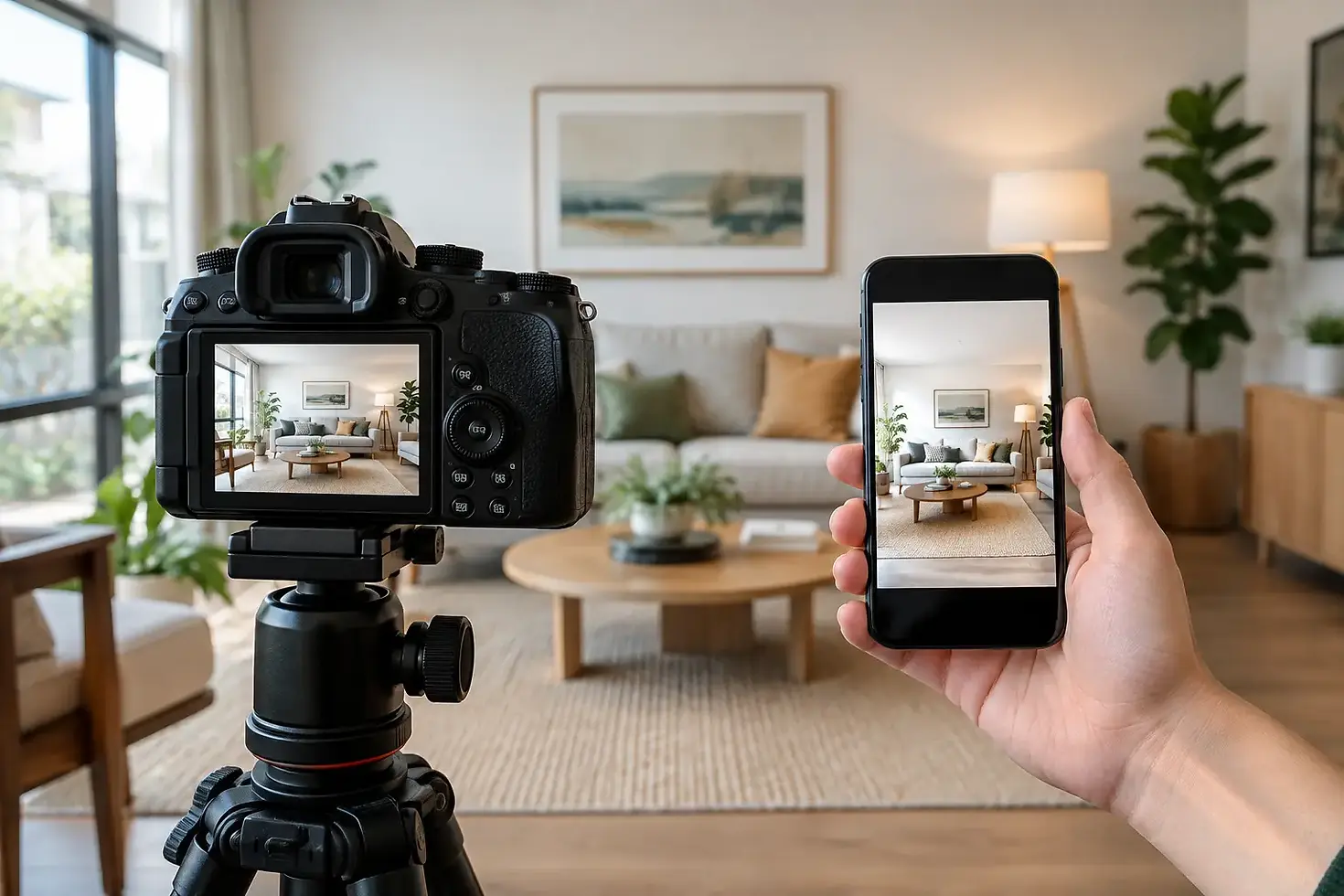
Interior Photography Versus Smartphone Photos

A buyer scrolls past a dark living room in less than a second. A guest comparing vacation rentals may never open a listing whose photos feel cramped, yellow, or casually composed. That is the business difference behind interior photography versus smartphone photos: one is a quick record of a room, while the other is a marketing asset built to earn attention and create confidence.
For Phoenix real estate agents, short-term rental hosts, builders, and designers, the question is not whether a current smartphone can take a decent picture. It can. The question is whether those pictures present the property at the level required to compete for a sale, a booking, a client, or a higher perceived value.
Interior Photography Versus Smartphone Photos: The Real Difference
Smartphone cameras have improved dramatically. They are convenient, fast, and capable of making a bright, simple room look respectable in favorable light. For a quick social media update, a renovation progress shot, or an informal before-and-after, that may be all that is needed.
Marketing a property is a different assignment. A listing image has to communicate scale, layout, condition, light, and lifestyle without misleading the viewer. It needs to make the next click feel worthwhile. Professional interior photography combines purpose-built equipment with deliberate composition, controlled lighting, advanced editing, and an understanding of how buyers and guests evaluate spaces online.
The distinction is especially clear in challenging rooms. Kitchens often have bright windows, dark cabinets, reflective appliances, and mixed lighting. Bathrooms are small, glossy, and easy to distort. Living rooms need to feel open without making the architecture appear unnatural. A smartphone's automatic settings make rapid decisions for the scene. A professional photographer manages the scene so the final image looks balanced, accurate, and inviting.
Light Is Where the Gap Usually Shows First
Most interiors contain competing light sources: daylight through windows, warm ceiling fixtures, shaded corners, and reflections from glass or polished surfaces. A phone may brighten the entire frame until the windows turn white and the room loses depth. Or it may expose for the window, leaving the interior dim and unwelcoming.
Professional photography uses intentional exposure and lighting techniques to retain a natural view through windows while keeping the room properly illuminated. Colors are corrected so white walls look white, wood tones remain believable, and finishes read as they do in person. The goal is not an overly edited image. It is an image that makes the space feel its best while remaining credible to the viewer who arrives for a showing or checks in for a stay.
That credibility matters. Overprocessed photos can create a disappointing gap between online expectation and reality. Underexposed phone photos create the opposite problem: a property may be better than it appears, but the audience never stays long enough to find out.
Composition Sells the Room, Not Just the Furniture
A smartphone encourages a simple workflow: stand in the doorway, hold up the phone, and capture what is visible. The result often includes awkward vertical lines, too much ceiling or floor, distracting furniture edges, and a perspective that makes the room look smaller than it is.
Professional interior photography is composed around the room's selling points. The camera height, lens choice, angle, and framing are selected to show flow and proportion. Strong images lead the eye from one feature to the next, whether that is a kitchen island, a mountain-facing window, a statement fireplace, or the connection between indoor and outdoor living.
Wide-angle photography is not simply about fitting more into the frame. Used carelessly, it can stretch walls, bend lines, and make furnishings look strange. Used well, it creates a spacious, polished view while preserving the geometry of the home or commercial environment.
What Smartphone Images Can Cost a Listing or Rental
The cost of casual imagery is rarely a single, obvious number. It shows up as weaker first impressions, fewer saved listings, lower inquiry volume, and more time spent explaining a property that did not make its case online. In crowded search results, a buyer or guest is comparing visual quality before they have read the description.
For listing agents, phone images can also affect the client relationship. Sellers expect a clear marketing plan, particularly when the home has been prepared, staged, or priced to compete. Delivering premium photography reinforces that the listing is being handled with care and that the agent is investing in its performance.
For Airbnb and VRBO hosts, photography has a direct relationship to guest expectations. Guests want to see the sleeping arrangements, kitchen functionality, workspace, bathrooms, outdoor areas, and overall condition before committing. Clean, well-lit images reduce uncertainty. They also help a rental stand out when guests are filtering dozens of similar properties by location, amenities, and price.
Commercial and architectural projects face a related challenge. A designer, builder, or developer is not only documenting a finished space. They are presenting craftsmanship, materials, decisions, and brand standards to future clients and stakeholders. Crooked lines, uneven color, and weak lighting can undermine work that was exceptional in person.
When a Smartphone Is Good Enough
There is a practical place for phone photography. A quick shot can document a repair, show a staging update to a client, capture a behind-the-scenes moment, or support timely social content. It is also useful when the image is temporary and has no meaningful role in a buying or booking decision.
The line changes when the image becomes a primary sales tool. If it will appear on the MLS, a real estate portal, a vacation rental platform, a builder portfolio, a proposal, or paid advertising, the quality standard should rise. Those images represent both the property and the professional behind it.
Budget can be a consideration, particularly on lower-priced or high-volume inventory. Even then, it is worth weighing photography against the cost of extended market time, price reductions, missed bookings, or a weaker brand impression. The right package depends on the property, audience, and marketing plan, but quality visuals should be treated as part of the campaign rather than an afterthought.
Professional Images Create More Marketing Options
A well-photographed property produces more than a gallery of still images. It provides visual material that can support listing promotions, email campaigns, social posts, brochures, booking pages, and agent presentations. The same standard of presentation can extend to twilight images, aerial views, video, virtual tours, floor plans, and realistic virtual staging when those tools fit the property.
This is where a professional media strategy becomes more valuable than a camera alone. A twilight image can emphasize curb appeal and outdoor entertaining. Drone imagery can establish lot position, proximity, and surrounding views. A virtual tour can help an out-of-town buyer understand circulation before scheduling a showing. Each asset has a job, and not every property needs every asset.
For example, a downtown condo may benefit most from bright interior photography, building amenities, and a floor plan. A luxury home with a resort-style backyard may warrant twilight coverage and aerial imagery. A vacant rental may need virtual staging to help guests or tenants understand how the rooms can function. The strongest approach is tailored to the marketing challenge, not built around a one-size-fits-all checklist.
Choosing Images That Support Performance
Before scheduling photography, consider the audience's likely questions. What will make a buyer pause? What will help a guest feel comfortable booking? Which design details demonstrate the quality of a commercial project? Preparing the space around those answers makes a visible difference.
Decluttering, turning on appropriate lights, opening window coverings where privacy allows, and removing personal distractions help the camera focus on the property. Professional guidance before the shoot can prevent small details from pulling attention away from the room itself. Timing matters too. A home with dramatic western light, a shaded patio, or an active construction schedule may call for specific planning.
At Pickard Photography, the standard is not simply sharper photos. It is visual media designed to help a property command attention, build confidence, and perform more effectively in the market.
The smartphone in your pocket is an excellent tool for quick communication. When a space needs to win the click, earn the showing, or justify the booking, give it imagery that does the same level of work.


Comments