

A Real Estate Photography Pricing Guide for 2026

A $250 photo shoot can be the right decision for one listing and an expensive mistake for another. When buyers, guests, tenants, and project stakeholders make their first judgment from a screen, the question is not simply what visual media costs. It is what that media needs to accomplish. This real estate photography pricing guide helps Phoenix agents, rental operators, and built-environment professionals evaluate pricing based on property type, marketing goals, and the value of a stronger first impression.
What Real Estate Photography Usually Costs in Phoenix
Real estate photography pricing is generally shaped by the property’s size, access, visual complexity, location, turnaround requirements, and selected media. A compact, well-prepared condo requires a different level of planning and production than a 5,000-square-foot luxury home, an occupied vacation rental, or a commercial project with architectural details that need to be photographed precisely.
For standard daytime listing photography in the Phoenix market, a smaller property may commonly fall in the $200 to $350 range. Mid-size homes often land between $300 and $500, while larger homes, luxury listings, and properties with extensive outdoor amenities may range from $450 to $700 or more. Large estates, commercial spaces, and architectural assignments are usually quoted individually because the scope can vary dramatically.
Those ranges are useful starting points, not a substitute for comparing what is included. A lower quote may cover fewer final images, limited editing, a slower delivery timeline, or no flexibility if the property needs a better shooting window. A higher quote may include more polished editing, better composition, MLS-ready delivery, careful handling of difficult light, and a more dependable experience for both the agent and homeowner.
How to Use This Real Estate Photography Pricing Guide
The most productive way to compare pricing is to start with the listing’s business objective. Are you trying to generate showings for a move-in-ready home? Improve bookings for a vacation rental? Present a newly completed design project to potential clients? The right package is the one that supports that goal without paying for media that will not be used.
A standard photo package is often enough for a straightforward entry-level listing with a clean interior, good natural light, and no major differentiators beyond the basics. As the price point rises, visual expectations rise with it. In competitive neighborhoods, a premium home photographed like an average listing can weaken the perceived value before a buyer has read the description.
For short-term rentals, think beyond the number of images. Guests need to understand flow, sleeping arrangements, outdoor living, workspaces, and the small details that make a stay feel worthwhile. For architects, builders, and designers, the priority may be material texture, proportion, craftsmanship, and images suitable for portfolios, proposals, publications, and brand marketing. The deliverables should match the audience, not just the square footage.
The Add-Ons That Can Change Your Total Investment
Photo coverage is the foundation, but the media choices around it are often what give a property an edge in a crowded feed. Add-ons should be chosen because they clarify value or create stronger emotional pull, not because every listing needs every service.
Drone imagery commonly adds roughly $150 to $300, depending on the property and flight complexity. It is especially valuable when the home has meaningful lot size, mountain views, golf frontage, nearby amenities, a pool setup, or a location that is difficult to communicate from ground level. In Phoenix, aerials can show a buyer how a property relates to desert views, community features, and surrounding development. They matter less for a condo with no exterior story to tell.
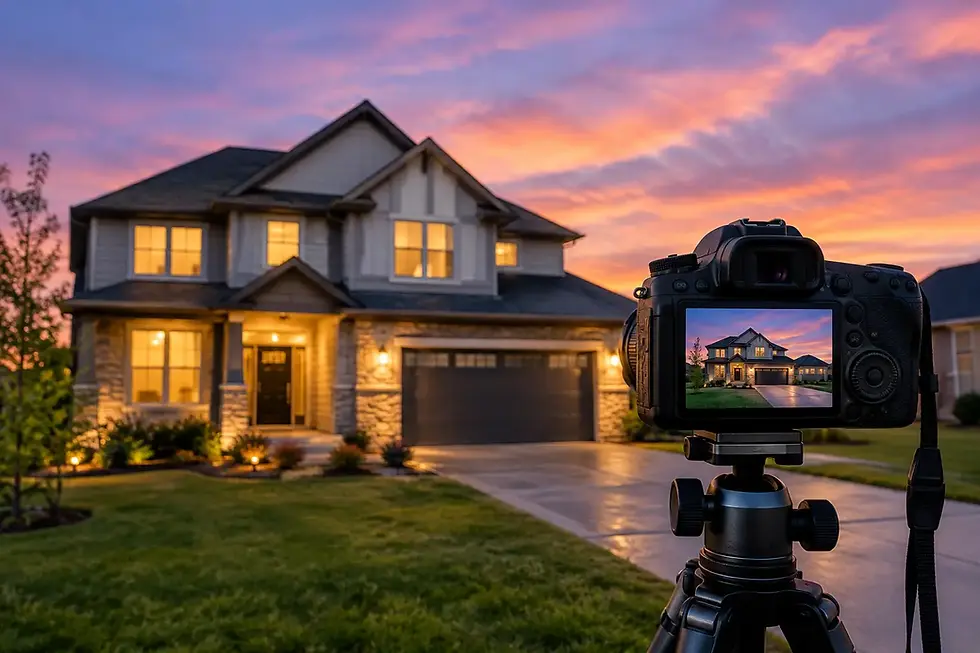
Twilight photography often ranges from $150 to $350 or more. It is a premium presentation tool for properties where exterior lighting, pools, patios, city views, or architecture become more compelling after sunset. One well-executed twilight hero image can set the tone for the entire listing, but it should be intentional. A standard home without a distinct exterior feature may see a better return from stronger daytime coverage or a virtual tour.
Virtual staging is frequently priced per image, often around $40 to $100 depending on the room and level of customization. It can be highly effective for vacant properties, outdated rooms, or spaces with awkward furniture. The standard should be realism. Staging should help buyers understand scale and potential without creating a misleading version of the property.
Virtual tours and floor plans generally add another $150 to $400 or more, based on the property size and platform. They are particularly useful for out-of-town buyers, busy families, vacation-rental guests, and properties with layouts that are hard to understand from still images alone. A floor plan answers practical questions quickly: Where is the primary suite? How does the kitchen connect to the living area? Is there room to work from home?
Cinematic video can range from $300 for a concise listing reel to $800 or more for larger properties, detailed productions, or commercial work. Video earns its place when it will be actively used across social media, email marketing, paid campaigns, listing presentations, or a property website. If it will only be posted once and forgotten, a photo-first package may be the wiser investment.
Why the Cheapest Quote Can Cost More
Photography is one of the few marketing decisions that shapes every other touchpoint. The listing images appear on the MLS, portals, social posts, brokerage materials, email campaigns, and sometimes paid advertising. For rentals, they influence whether a guest clicks into the listing or keeps scrolling. For commercial and design work, they may become the visual proof behind the next proposal or project award.
That does not mean every property needs a top-tier package. It means the work should be appropriately matched to the opportunity. A rushed shoot with inconsistent exposure, distorted lines, poor room selection, or weak editing can make an otherwise excellent property feel ordinary. Replacing those images later can cost more than hiring the right partner at the start, especially once a listing has already lost momentum.
When reviewing a quote, ask what is being delivered and how it will be handled. Confirm the expected number of final images, turnaround time, editing standards, image resolution, MLS readiness, and whether rescheduling or weather considerations are addressed. For drone work, confirm that the operator can legally and safely perform the flight. For virtual staging, make sure the provider clearly identifies staged images and preserves the architectural reality of the space.
Package Pricing Versus A La Carte Services
Packages make sense when several assets will be used together. A residential agent marketing a $1 million home may benefit from daytime photography, aerials, a floor plan, and one twilight image because each asset answers a different buyer question. A short-term rental owner may prioritize photography, a virtual tour, and a floor plan to improve both click-through interest and guest confidence.
A la carte pricing can be smarter when the property has one standout feature. A desert-view home may only need drone coverage added to a strong photo package. A vacant condo may need a handful of virtually staged images rather than a full media production. The best provider should be able to recommend the right scope, even when that means recommending less.
For recurring clients, consistency has its own value. Using a trusted visual partner creates a recognizable quality level across listings and reduces the time spent re-explaining expectations. It can also make scheduling, property preparation, and delivery more predictable when fast market timing matters.
Budget for the Listing You Want to Sell
A practical rule is to view photography as part of the property’s positioning strategy, not an administrative expense. Higher-value properties, visually distinctive homes, and income-producing rentals typically justify a larger visual budget because presentation has more room to influence perceived value, inquiries, showings, and bookings.
Before booking, decide where the property wins and where it needs help. If the outdoor living area is the selling point, invest in aerial or twilight coverage. If the layout is confusing, add a floor plan or tour. If the rooms are vacant, use realistic virtual staging selectively. This approach keeps the budget focused on assets that give prospective buyers and guests a clearer reason to act.
The right photography package should make marketing easier after the shoot is over. At Pickard Photography, the goal is not simply to deliver polished images. It is to provide visual assets that help the right property earn attention, confidence, and stronger results when the market is making a decision in seconds.

Comments