

Best Camera Angles for Listing Photos

A listing can have clean editing, bright windows, and sharp detail, then still underperform because the angles are wrong. The best camera angles for listing photos do more than show a room - they shape how buyers, guests, and decision-makers read the space in the first two seconds. Get the angle right, and a property feels open, functional, and worth a closer look. Get it wrong, and even a strong home can feel cramped, awkward, or forgettable.
Why camera angle matters more than most sellers think
In property marketing, buyers are not just looking at finishes. They are judging layout, flow, scale, and livability. Camera angle is what translates those qualities into a two-dimensional image.
A poor angle can make a large room feel narrow, distort furniture proportions, or hide the relationship between spaces. A strong angle does the opposite. It helps viewers understand how the room works. That matters on the MLS, on short-term rental platforms, and in commercial marketing, where attention is limited and comparison is immediate.
The goal is not to make a property look unreal. It is to present it at its best while staying truthful. That balance is where professional real estate photography separates itself from quick point-and-shoot coverage.
The best camera angles for listing photos start with room logic
There is no single angle that works for every room. The right choice depends on size, shape, ceiling height, window placement, and what the room needs to communicate. Still, the strongest listing images usually follow one principle: show the space in a way that feels natural to someone standing there.
That usually means shooting from a corner or slightly off-corner position rather than straight-on from the doorway. Corner angles reveal two walls, add depth, and help the viewer understand the room’s footprint. In most homes, this creates a more complete and inviting image than flattening the scene from the center of one wall.
Height matters just as much. A camera set too high makes furniture feel small and floors take over the frame. Too low, and the room can feel top-heavy or distorted. In many residential interiors, a camera height around chest level produces a balanced view. Kitchens and bathrooms can require slight adjustments depending on counters, mirrors, and tile lines, but the principle stays the same: keep the perspective clean and believable.
Living rooms: prioritize depth and connection
Living rooms often carry the emotional weight of a listing. They suggest comfort, entertaining potential, and visual style. The best angle usually captures both the seating area and its relationship to nearby features such as windows, fireplaces, patios, or adjoining dining spaces.
A diagonal composition from a back corner often works best because it gives the room depth and keeps the furniture arrangement legible. If the room opens into another part of the home, it can be smart to include that connection. Open-concept properties benefit when the photo shows flow rather than isolating each zone too tightly.
There is a trade-off, though. Going too wide to force everything into one frame can make the room feel stretched and less premium. If the space is large or irregular, two well-composed angles can market it better than one overextended shot.
Kitchens: lead with layout, not appliances
In kitchens, people want to understand workspace, storage, and finish quality quickly. The strongest angles usually show the shape of the kitchen first, then let the materials support the story.
A corner angle that captures cabinetry on two sides, plus the island if there is one, is often the most effective. It gives buyers a read on circulation and function. Straight-on shots can work in galley kitchens or when a statement range wall is the clear focal point, but they tend to feel flatter unless the architecture is especially strong.
Avoid angles that let the island block too much of the cabinetry behind it. Likewise, shooting too high can make counters dominate the image, while shooting too low can exaggerate barstool legs and undercut the clean lines of the room. For premium presentation, the angle should make the kitchen feel efficient, open, and easy to use.
Bedrooms: keep it calm and proportional
Bedrooms sell best when they feel restful, not crowded. The most reliable angle is often from the doorway corner or the corner opposite the bed, depending on room size. In either case, the bed should usually anchor the image without swallowing the frame.
If the room has strong natural light or a view, the best angle may include both the bed and the window wall. If the bedroom is smaller, it is even more important not to force a dramatic angle that distorts dimensions. Buyers are quick to notice when a small room looks suspiciously stretched.
Symmetry can also work well here. If the bed is centered on a feature wall with matching nightstands and balanced lighting, a clean head-on image can look polished and upscale. The key is using that symmetry intentionally, not by default.
Bathrooms: control lines and reflections
Bathrooms are one of the hardest spaces to photograph well because they are small, reflective, and easy to distort. The best camera angles for listing photos in bathrooms usually avoid extreme width and instead focus on clean geometry.
A slight corner angle can help show both the vanity and the shower or tub, which gives the room context. But in tighter bathrooms, a straight composition may actually be stronger if it keeps vertical lines straight and avoids odd stretching at the edges.
Mirrors create another challenge. The camera position has to avoid unwanted reflections while still showing enough of the vanity area to feel complete. That takes planning, not luck. In premium property marketing, bathrooms should look bright, clean, and well-composed - never chaotic or warped.
Exterior angles: show architecture and approach
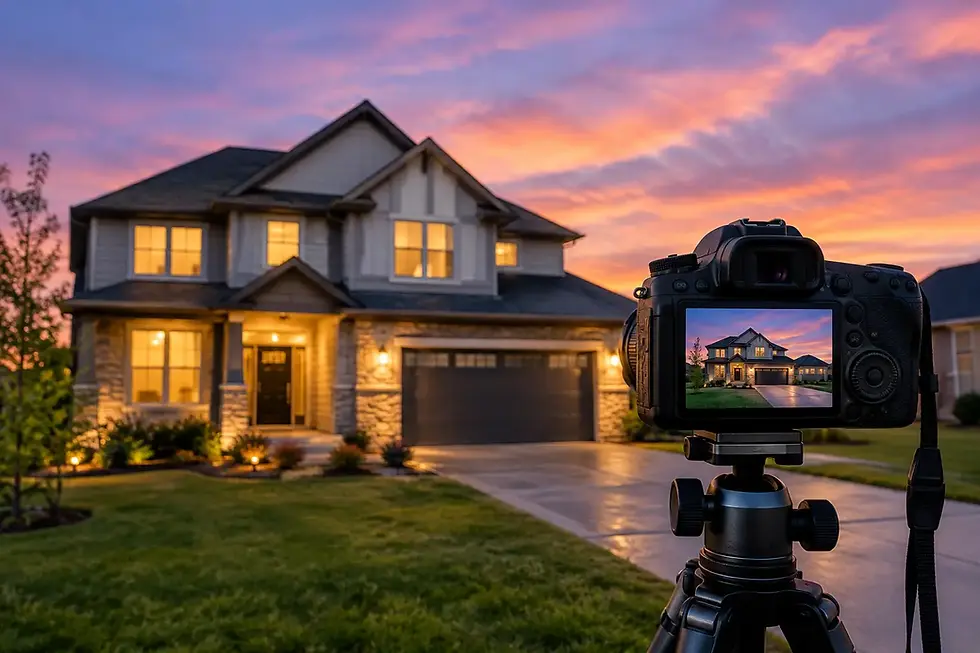
Exterior photography is where angle directly affects curb appeal. A front-facing shot can be effective, especially when the home has strong symmetry. But many properties benefit more from a three-quarter angle that shows both the front elevation and some depth along one side.
That perspective helps the structure feel more dimensional and gives context to the lot, landscaping, and entry path. It can also reduce the flatness that happens when a house is photographed straight-on in harsh light.
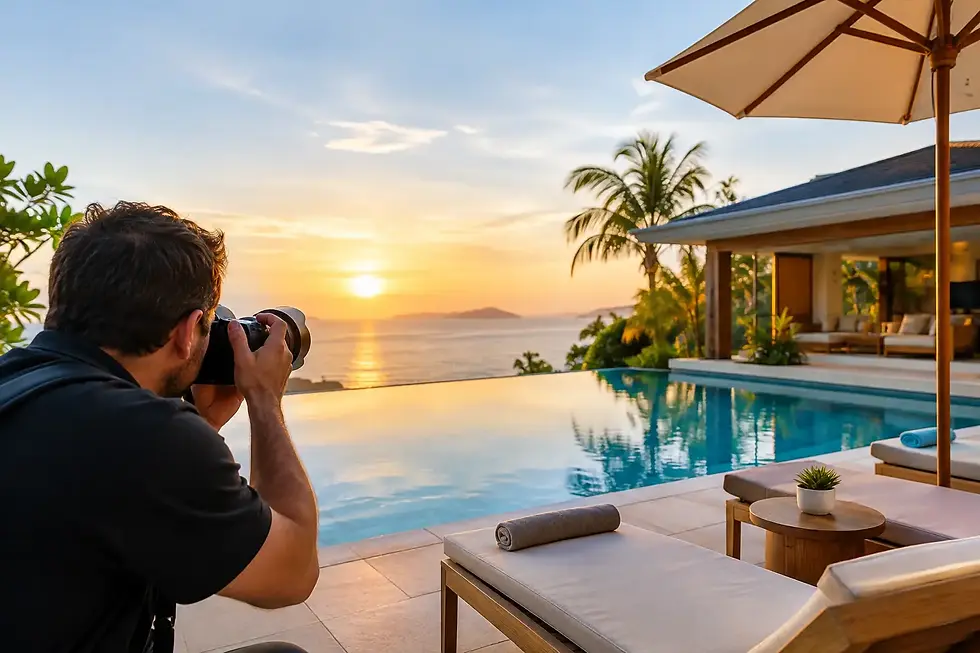
For backyards, angle depends on the selling feature. If the pool is the draw, the composition should connect the water, patio, and rear elevation. If the home backs to mountain views or golf course frontage, the angle should make that setting feel integrated with the lifestyle of the property.
In Arizona, timing matters almost as much as camera position. Light can be intense, and the wrong angle at the wrong hour can create deep shadows that obscure the architecture. That is one reason polished exterior work requires more than simply showing up with a camera.
Small rooms and tight spaces need restraint
When a room is small, the temptation is to rely on the widest possible lens and hope the image feels bigger. That often backfires. Yes, the room looks larger, but it can also look misleading, with bent lines and exaggerated distances.
A better approach is to choose an angle that makes the room understandable. In a laundry room, office nook, or compact guest room, clear layout beats inflated scale. Buyers appreciate honesty, especially after they walk the property in person.
This is where experience matters. A professional knows when to widen slightly, when to keep the framing tighter, and when a room simply does not need heroic treatment. Not every space needs to feel grand. It needs to feel useful and market-ready.
What great listing angles actually accomplish
The right angle does not just make a photo prettier. It supports performance. It increases click-through appeal, keeps buyers engaged longer, and helps them picture how the property lives. For agents, hosts, and commercial marketers, that can translate into stronger inquiries, more showings, better bookings, and a sharper overall brand impression.
This is especially true in crowded markets, where many listings blend together visually. Strong angles create order. They give the gallery rhythm. They help each room say something clear.
That is why premium photography is not about taking more photos. It is about making better decisions before the shutter clicks. At Pickard Photography, that performance mindset is what turns visual media into a real marketing asset, not just another box checked before launch.
If you are preparing a property for market, the best angle is rarely the most obvious one. It is the one that makes the space feel true, attractive, and easy to understand at a glance - because that is what gets people from scrolling to scheduling.

Comments