

Professional Photography Versus Smartphone Photos

A buyer scrolling the MLS or a traveler comparing vacation rentals makes an initial judgment in seconds. At that moment, professional photography versus smartphone photos is not a debate about camera brands. It is a decision about how much attention a property earns before someone ever steps through the door.
Smartphones are remarkably capable. They are convenient, fast, and useful for documenting a renovation, sharing a quick update with a client, or capturing a detail on-site. But for a listing, rental, completed build, or commercial project competing for attention online, convenience is rarely the same as market-ready presentation.
Why the difference shows up in performance
A property image has a job to do. It needs to stop the scroll, communicate space accurately, highlight the strongest features, and create enough confidence for a buyer, guest, tenant, or stakeholder to take the next step.
Smartphone images can make a room look darker, tighter, or less refined than it feels in person. Windows often blow out to pure white, interior shadows lose detail, and mixed lighting creates yellow or blue color casts. A wide-angle phone lens may also distort corners or make vertical lines lean, especially in rooms where clean architectural geometry matters.
Professional photography is built around controlling those variables. The photographer evaluates the room, chooses the strongest composition, balances interior and exterior light, and edits each final image for a consistent, natural finish. The result is not an artificial version of the property. It is a clear, compelling representation that lets the space perform at its best.
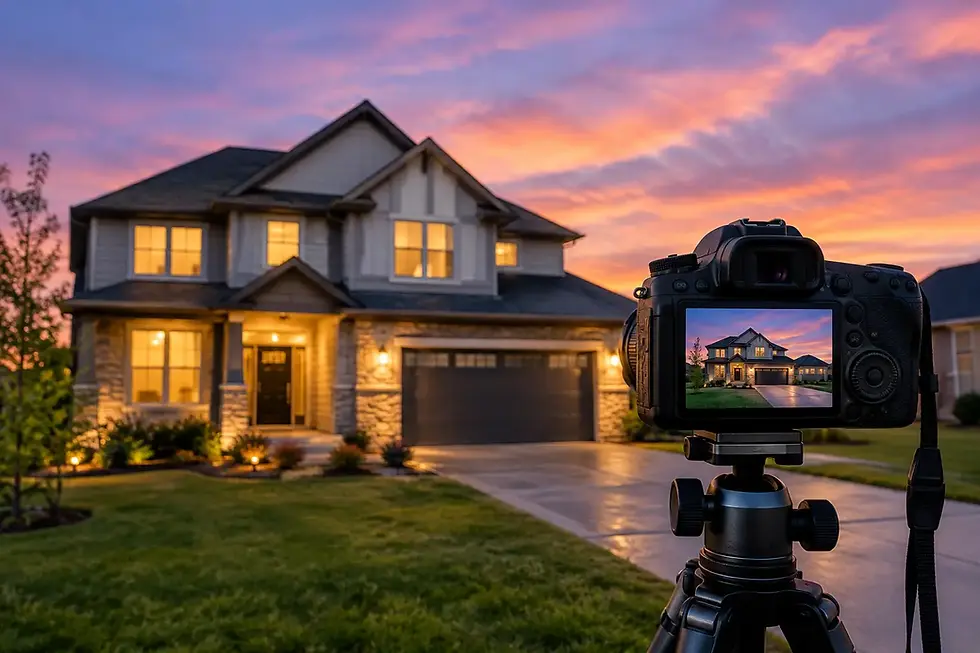
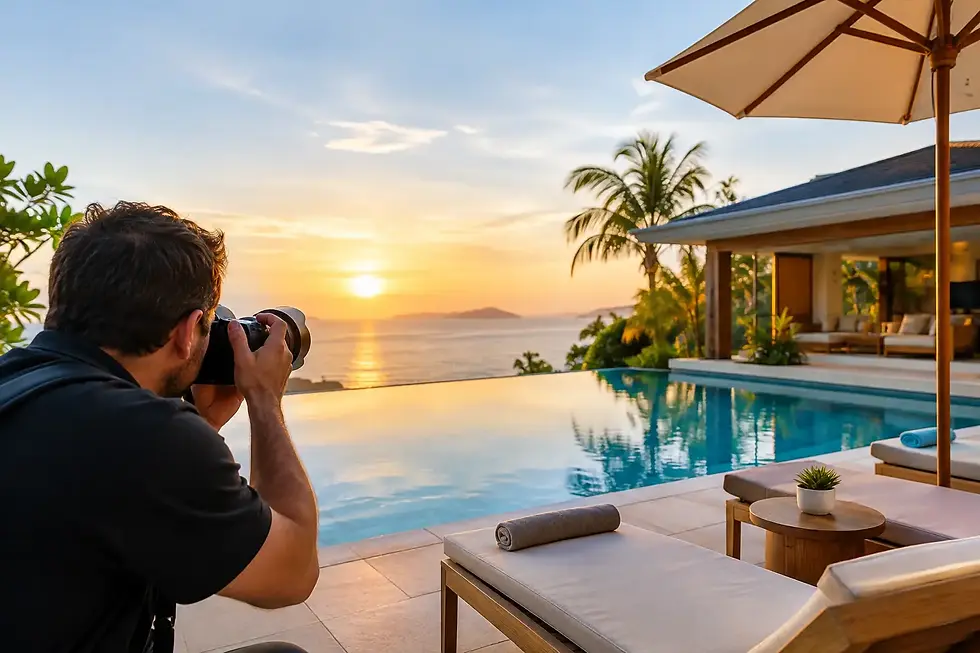
For Phoenix properties, that control can be especially valuable. Intense desert light, bright windows, reflective surfaces, and dramatic sunsets can create exceptional visual opportunities, but they also expose the limitations of a quick phone capture. Proper exposure and timing can preserve the view, the materials, and the atmosphere in the same frame.
Professional photography versus smartphone photos: the practical gap
The most visible difference is usually not the camera itself. It is the process behind the image.
A professional photographer walks into a space with a marketing objective. They identify the images that will sell the story of the property: the approach to the home, the primary living area, the kitchen, the owner’s suite, outdoor living, amenities, and any distinctive architectural features. They also recognize what should stay out of frame, from distracting cords and awkward furniture placement to reflections and clutter that pull focus from the room.
A smartphone photo is often captured from wherever a person happens to be standing. That can create crowded compositions, clipped furniture, uneven sightlines, and rooms that feel disconnected from one another. Even a beautiful home can appear ordinary when photographed without a plan.
Professional work also creates consistency across an entire listing or project. Exposure, color, vertical lines, and editing style work together so the gallery feels intentional. That consistency matters because it signals care. To potential clients, buyers, and guests, polished media suggests that the property, the listing agent, the host, or the builder is equally professional.
Light changes the perceived value of a space
Light is one of the fastest ways an image gains or loses credibility. Phone cameras use automated processing to compensate for difficult scenes, and that processing can be useful for everyday snapshots. In real estate and architectural photography, however, automation can create flat rooms, exaggerated contrast, muddy corners, and unrealistic colors.
A professional uses lighting technique, exposure blending, and careful post-production to keep a room bright without erasing depth. Window views remain visible. Cabinet finishes look like their actual finish. A white wall stays neutral rather than turning orange under warm bulbs. These details shape perceived quality, particularly for luxury homes, design-forward rentals, new builds, and commercial spaces.
Composition makes rooms feel usable
Buyers and guests are not only looking at square footage. They are trying to understand how a space lives. Is there room to gather? Does the kitchen connect naturally to the living area? Is the patio truly an extension of the home? Can a guest picture morning coffee, remote work, or a poolside evening there?
Thoughtful composition answers those questions visually. It reveals flow, scale, and defining features without relying on a long description. A professional knows how to position the camera to show a room at its most functional and inviting while maintaining accurate proportions.
That point matters for commercial and architectural clients as well. Finished projects need to communicate design intent, craftsmanship, circulation, materials, and brand standards. A few casual phone images may document that a project is complete. They rarely create the portfolio assets that help architects, builders, and designers win the next opportunity.
When smartphone photos are enough
There is a place for smartphone photography. A quick progress update for a contractor, a behind-the-scenes social post, a maintenance issue, or a temporary reference image does not always require a full production. Speed and simplicity may be the right trade-off.
The question is whether the image will influence a decision with real financial value. If it will appear on the MLS, a rental platform, a brokerage presentation, a website, a proposal, or a project portfolio, the standard should be higher. Those images are not just documentation. They are marketing assets.
For a lower-priced listing or a property with a very short marketing window, budget can be a real consideration. Yet weak photos can cost more than a professional shoot when they reduce online interest, generate fewer showings, or force a price adjustment later. The right decision depends on the property and the business goal, but the visual presentation should match the value of the opportunity.
The stronger choice is often a complete media plan
Still photography is the foundation, but some properties need more than a gallery of images. A large home, a luxury rental, a new development, or a design-led commercial space may benefit from aerial imagery, a cinematic video, a virtual tour with floor plan, or realistic virtual staging.
These services work best when they support a clear marketing purpose. Drone imagery can establish lot size, surrounding views, proximity to amenities, or the scale of a commercial site. Video can create emotional momentum and show the transition between indoor and outdoor spaces. A floor plan gives serious prospects a practical understanding of layout. Virtual staging helps vacant rooms feel purposeful without misleading the viewer.
The goal is not to add media for its own sake. It is to remove friction from the decision process. A prospective buyer who understands the layout, a guest who can picture the experience, or a developer who sees the project clearly is more likely to engage with confidence.
What professional images communicate before the first showing
Premium visual media sends a message beyond what is pictured. It tells a seller that their agent is prepared. It tells a rental guest that the host cares about the experience. It tells a commercial client that a builder, architect, or designer takes presentation seriously.
That message can influence perception before anyone reads the property description or reviews the specifications. In crowded markets, where listings and projects are often compared side by side, visual quality becomes part of the value proposition.
Professional photography also reduces the risk of setting the wrong expectation. Overly wide smartphone images can make a room appear larger than it is, while poor lighting can make it seem smaller or less maintained. Accurate, polished photography creates interest without creating disappointment at a showing or check-in.
Make the camera decision based on the outcome
The best question is not, “Can a smartphone take a good photo?” It can. The better question is, “What does this property need to achieve?”
If the goal is a quick record, a phone may be all that is needed. If the goal is more listing views, stronger showings, higher-quality rental inquiries, a persuasive portfolio, or a confident first impression, professional photography is an investment in the outcome.
A well-presented space gives people a reason to pause, picture themselves there, and act. That is where the real value of professional imagery begins.

Comments